For a long time I thought I had a food intolerance. I was constantly trying to figure out which specific thing I had eaten that made me feel so terrible afterward. Was it gluten? Dairy? Sugar? I cut things out, kept food diaries, obsessed over ingredients. And none of it fully explained why I would eat a normal meal and then spend the next two hours horizontal, heart racing, completely wiped out.
It was not the food. It was the blood flow.
What happens in your body the moment you start eating
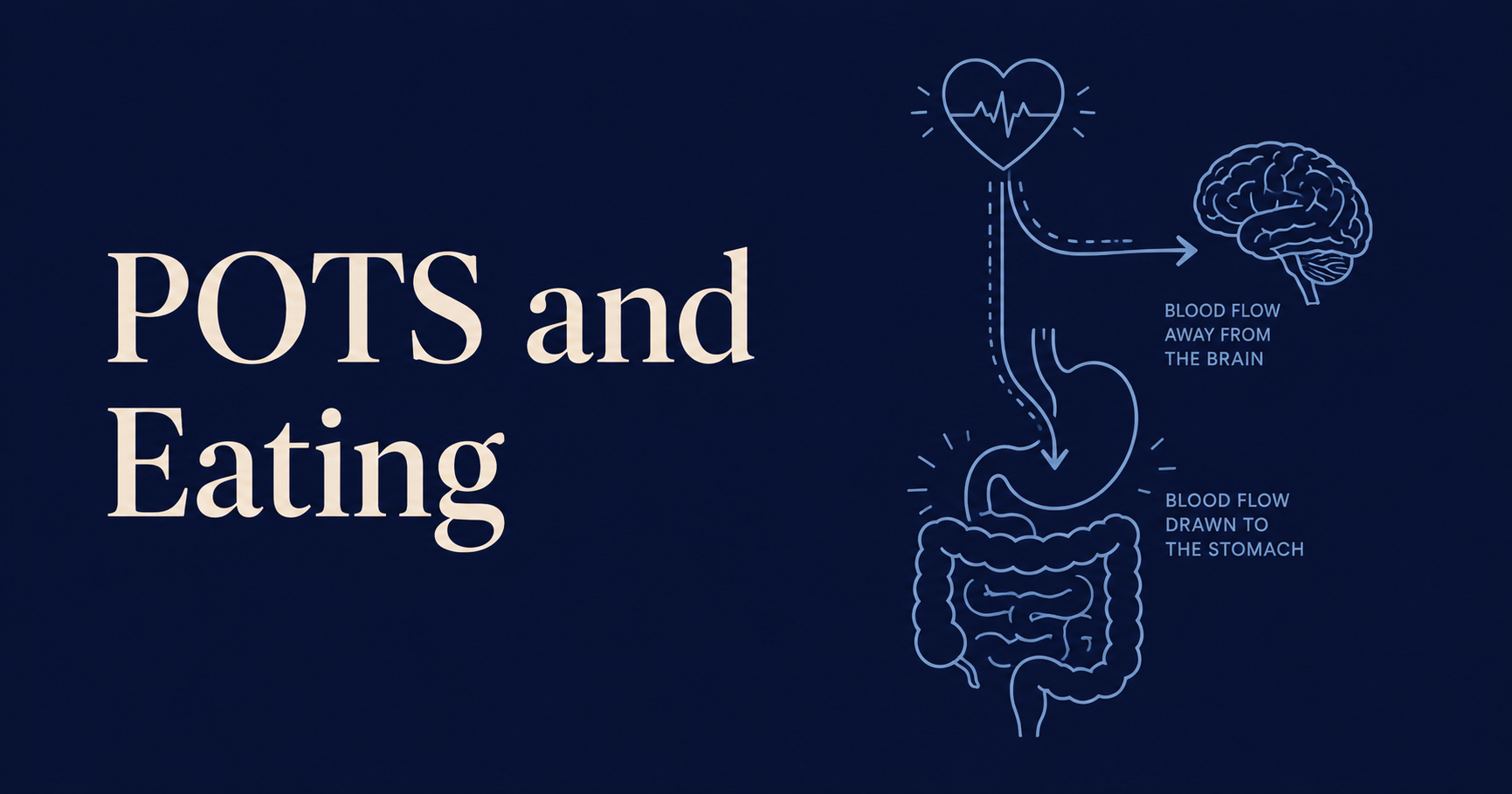
Digestion is a massive circulatory event. The moment food enters your stomach, your body begins diverting blood to your digestive organs to handle the work of breaking it down and absorbing nutrients. Your stomach, small intestine, and liver all need significantly more blood flow after a meal than they do when you are fasting. This is called postprandial hyperemia, and it is a completely normal and necessary process.
In a healthy autonomic nervous system, the rest of the body compensates automatically. Blood vessels elsewhere constrict slightly. The heart adjusts. Blood pressure stays stable. The brain keeps getting what it needs while the gut does its work.
In POTS, that compensation is already unreliable. Your autonomic system is struggling to maintain stable blood pressure and adequate circulation even under normal conditions. Ask it to also redirect a significant portion of your blood volume to your digestive system and it simply cannot keep up.
The result is basically a guaranteed flare
When blood rushes to your gut after eating and your body cannot compensate properly, the same thing that happens when you stand up happens after a meal. Blood pools away from your brain and central circulation. Your heart rate spikes trying to make up the difference. You feel dizzy, foggy, nauseated, shaky, exhausted, and sometimes your chest feels tight or your heart feels like it is working overtime.
This is why so many people with POTS feel significantly worse after eating, and why larger meals hit harder than small ones. The bigger the meal, the more blood your gut demands, and the bigger the circulatory challenge your already-strained autonomic system has to try to manage.
It can feel indistinguishable from a regular POTS flare, which is part of why it took me so long to connect it to food specifically rather than just assuming I was having a bad day.
Why certain foods make it worse
While the issue is circulatory rather than a food intolerance, certain types of food do make the postprandial blood flow demand greater.
High carbohydrate meals and high sugar foods cause a faster and more dramatic blood flow response to the gut. Simple carbs digest quickly and trigger a larger immediate demand on your digestive circulation. This is why a big bowl of pasta or a sugary meal can absolutely flatten someone with POTS in a way that a smaller protein-based meal might not.
Large meals in general are harder simply because of volume. More food means more digestive work means more blood diverted for longer.
Hot foods and drinks can also contribute because heat causes blood vessels to dilate more broadly, which compounds the pooling problem your body is already dealing with.
Why eating sitting upright can make things worse too
Posture matters here more than most people realize. When you eat sitting fully upright, gravity is already working against your circulation. Add the postprandial blood diversion on top of that and you have two forces pulling blood away from your brain at the same time.
This is why some people with POTS find that eating in a reclined position, or resting semi-reclined after a meal, genuinely helps. It is not laziness. It is reducing the orthostatic challenge at the exact moment your circulatory system is under the most strain.
What actually helps with postprandial symptoms
Smaller more frequent meals are one of the most consistently helpful strategies. Instead of three full meals, eating five or six smaller ones throughout the day keeps the digestive blood flow demand lower at any given time and gives your autonomic system a more manageable challenge to respond to.
Reducing simple carbohydrates and sugar, not because of intolerance but because of how quickly they spike digestive blood demand, can make a real difference. This does not mean you need to go low carb forever. It just means being thoughtful about the size and composition of meals during the period when your symptoms are most significant.
Salt and fluids before and with meals help by boosting your blood volume so there is more to go around even when a portion gets diverted to your gut. Some people find that drinking a large glass of water with electrolytes before eating helps blunt the postprandial response.
Staying reclined or at least not fully upright for a bit after eating is not something to feel embarrassed about. It is a practical response to a real physiological problem.
And as your conditioning improves and your autonomic regulation gets stronger, the postprandial response tends to improve alongside everything else. Your body gets better at compensating for the circulatory demands of digestion the same way it gets better at compensating for standing up. It takes time but it does change.
You were never reacting to the food. You were reacting to what the food asked your nervous system to do, and your nervous system was not ready for it yet.